
Understanding cholesterol levels (total, HDL, LDL) and triglycerides
by
CHRISTIAN23 March 2026 at 16:58 CET
Cholesterol levels are one of the most important risk indicators for arteriosclerosis and related cardiovascular diseases such as stroke and heart attack. Cholesterol levels are usually measured as part of a lipid profile, which includes several values: total cholesterol, LDL cholesterol, HDL cholesterol, and triglycerides. Blood cholesterol concentration is strongly influenced by lifestyle, exercise, and diet. Regularly measuring cholesterol levels and maintaining them within healthy ranges is a key aspect of preventing cardiovascular problems.
What is cholesterol?
Cholesterol is a fat-like substance that is essential for many bodily processes, such as the formation of cell membranes, hormones, and bile acids. Approximately 80% of cholesterol is produced by the body itself, primarily in the liver; only a small amount is obtained through food. Because cholesterol is not water-soluble, it is transported in the blood by proteins called lipoproteins. However, not all cholesterol is the same: there are different types, each with varying effects on health:
-
Total cholesterol: The weighted sum of all cholesterol levels in the blood.
-
LDL cholesterol (low-density lipoprotein, "bad" cholesterol): Transports cholesterol to the cells. High LDL levels can lead to deposits on the artery walls and thus to arteriosclerosis, increasing the risk of heart attack and stroke.
-
HDL cholesterol (high-density lipoprotein, "good" cholesterol): Transports excess cholesterol to the liver, where it is broken down. High HDL levels protect the blood vessels.
-
Triglycerides: These blood fats serve as energy storage. Elevated levels can also indicate cardiovascular risk.
There is also lipoprotein (a). Cholesterol levels in the blood are largely genetically determined and only partially influenced by lifestyle. They are not routinely measured.
Why measure cholesterol levels?
Elevated cholesterol levels often go unnoticed. They are therefore also called "silent killers." Regular cholesterol monitoring helps to detect elevated levels and counteract triggers for serious cardiovascular diseases early on. A high LDL level or elevated triglycerides are particularly critical, while a high HDL level is considered protective. Cholesterol levels can be determined quickly and easily with a drop of blood, for example, in selected pharmacies. If you would like to examine your levels in light of your diet, lifestyle habits, and long-term blood sugar levels, a comprehensive assessment as part of a PrevCheck is recommended.
What are healthy cholesterol levels for men and women?
Cholesterol limits vary depending on age and gender. Women often have higher HDL levels than men, while LDL and total cholesterol increase with age. Cholesterol levels in women change significantly after menopause. Total cholesterol, LDL, and triglycerides rise, while HDL levels fall. Due to the influence of estrogen, which stimulates HDL production, women have a slightly higher reference range than men.
In cases of pre-existing conditions (e.g., diabetes, familial hypercholesterolemia, or existing arteriosclerosis) or certain medications, the reference ranges may be much more conservative.
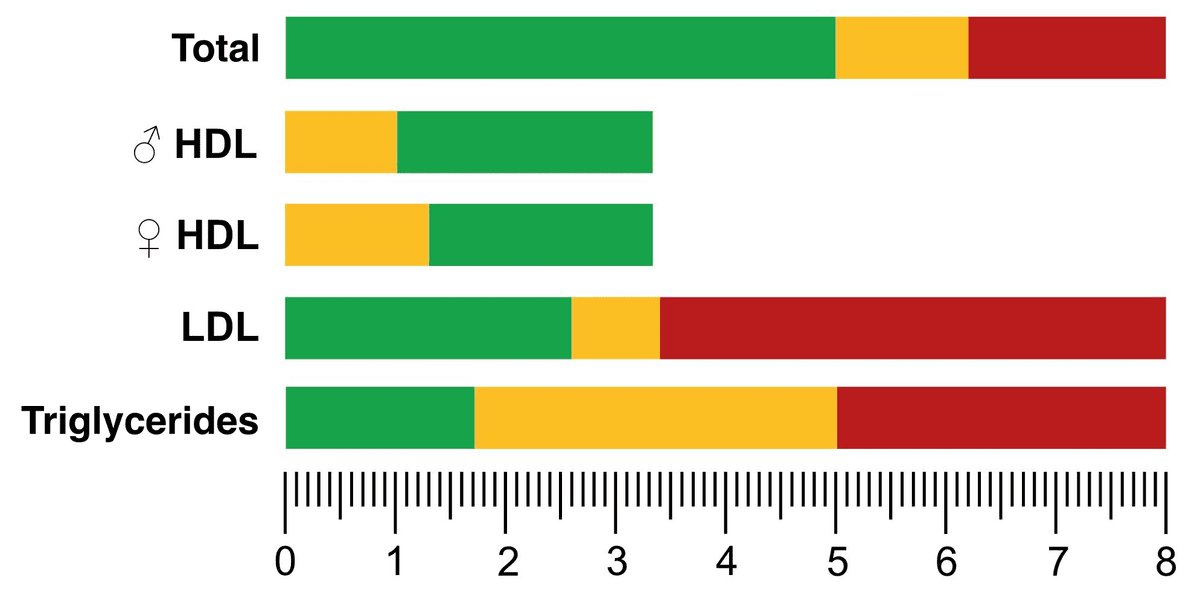 General reference ranges used for cholesterol levels without pre-existing conditions or medications. Although cholesterol levels naturally change with age, the target values for a healthy life remain constant.
Here is a general cholesterol level table for reference:
| Parameter | Value | Interpretation |
|---|---|---|
Totalmmol/l | < 5 | Optimal |
| 5.2 – 6.2 | Slightly elevated | |
| > 6.2 | Significantly elevated | |
HDLmmol/l | Female: > 1.3Male: > 1.0 | Optimal |
Female: ≤ 1.3 Male: ≤ 1.0 | Slight deviation | |
LDLmmol/l | < 2.6 | Optimal |
| 2.6 – 3.4 | Slightly elevated | |
| > 3.4 | Significantly elevated | |
Triglyceridesmmol/l | < 1.7 | Optimal |
| 1.7 – 5.0 | Slightly elevated |
Cholesterol Check as part of PrevCheck
With PrevCheck, your cholesterol levels are comprehensively assessed. The measurement in our partner pharmacies is performed using capillary blood, meaning a small prick of the fingertip is all it takes. Within a few minutes, you will receive your results, including an individual risk assessment. Since the PrevCheck takes lifestyle and other risk factors into account, the recommendations are tailored to you and your individual circumstances.
Conclusion
Regular monitoring of your cholesterol and triglyceride levels helps to identify triggers for serious cardiovascular diseases early and take the necessary steps. As part of the PrevCheck, we offer a convenient and reliable cholesterol measurement that empowers you to take control of your health within the context of your life. Take the first step toward a healthier future.
Read also about high blood pressure and blood sugar.
Get exclusive health tips & a 10 CHF discount on your first checkup!
Subscribe to Newsletter Now!
By submitting this information, you confirm that you have read and understood our Privacy Policy.